If you have been searching for how to become a Juwa distributor, you are not alone. In 2026, the online sweepstakes and gaming credit distribution space is drawing serious interest from entrepreneurs, game room operators, and digital business builders who recognize a model with genuine recurring-revenue potential. The demand is real, the platform is established, and the opportunity for the right operator is significant.
But here is what separates people who succeed in this business from those who wash out quickly: preparation. This is not a side hack or a passive income scheme. It is a real business that requires upfront research, legal due diligence, capital planning, and sustained operational effort. The operators who thrive are the ones who treat it that way from day one.
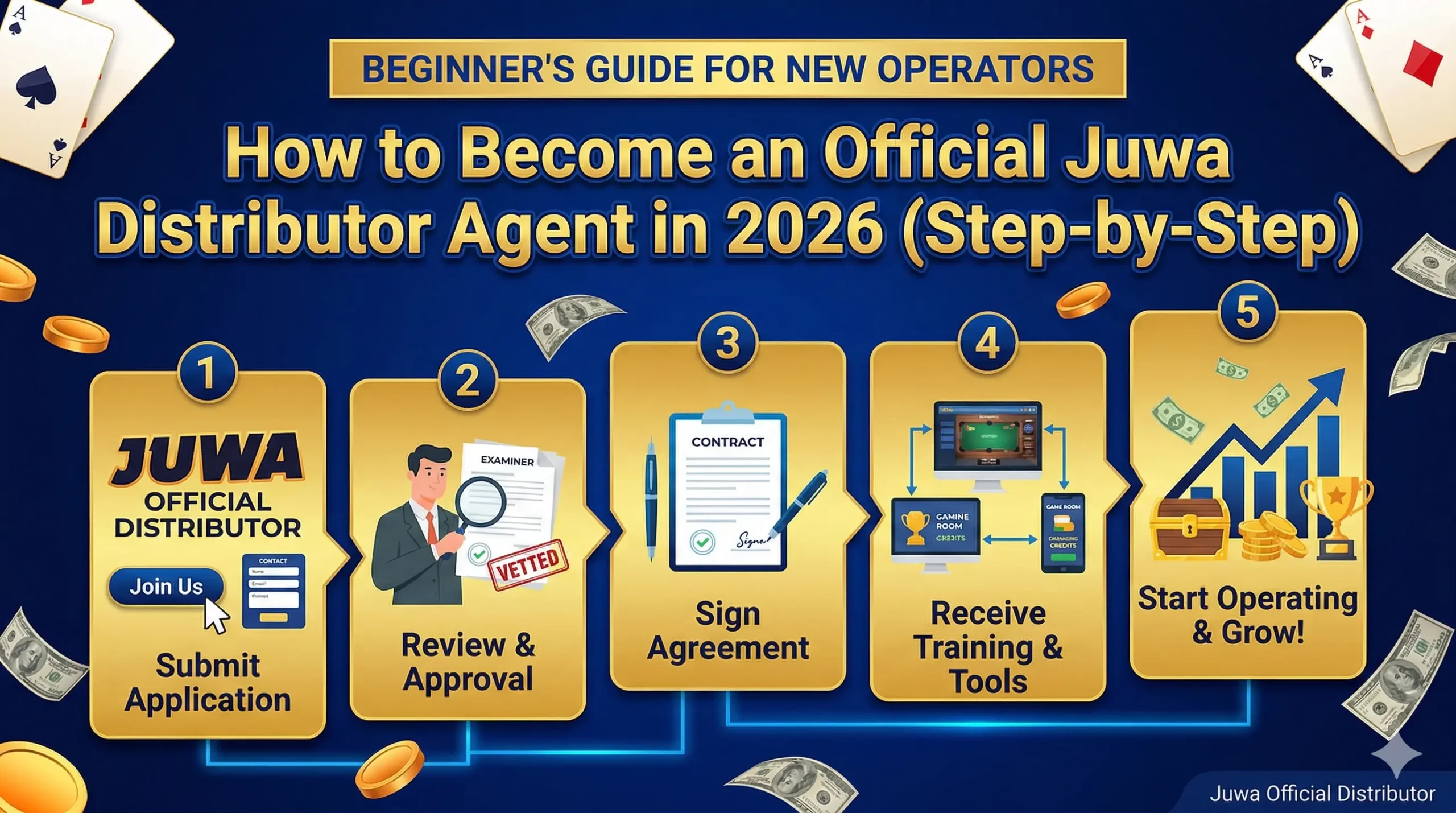
This guide walks you through every step of the process — from market research and legal review all the way to launch and growth. If you are ready to move beyond browsing and take a concrete step, explore the official Juwa distributor agent program to understand what getting started actually looks like.
Understand the Juwa Distributor Model
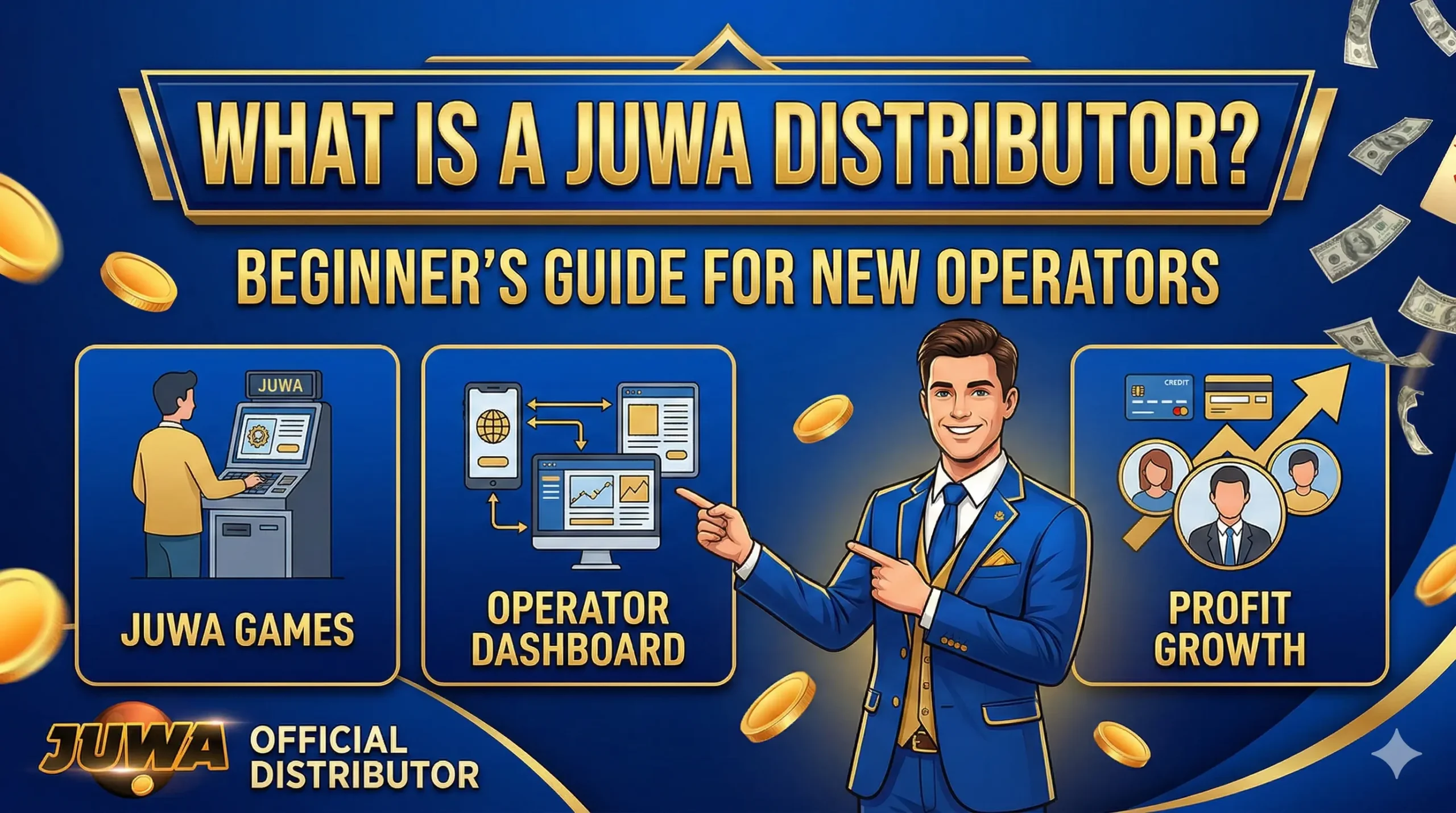
Before jumping into steps, it helps to be crystal clear on what you are signing up for. A Juwa distributor purchases gaming credits at wholesale prices from the platform and resells those credits to players at a retail price. The margin between those two numbers is your revenue. Players come back repeatedly to reload credits, which means a well-run distribution business generates recurring income rather than one-time sales.
The business model rewards operators who build loyal player communities. Every player who keeps returning adds cumulative lifetime value that far exceeds their first transaction. The more consistently you serve your players — with good pricing, fast credit delivery, and responsive support — the stickier your player base becomes and the more stable your revenue grows.
What this model is not: it is not a get-rich-quick arrangement, not a vending machine you can set and forget, and not an employment relationship where someone else handles the hard parts. You are running an independent business. You make decisions about marketing, pricing, compliance, and customer experience. The platform provides the infrastructure; you build the operation on top of it.
Approaching this with a business-owner mindset from the start — rather than a side-hustle mentality — is the single biggest predictor of whether a new distributor succeeds or stalls.
Step 1 – Research Your Market and Legal Landscape
The most important work you will do before spending a single dollar is research. This step has two equally critical components: understanding your legal environment and understanding your market.
Legal Research
Sweepstakes and online gaming regulations vary dramatically by state, county, and municipality. What is permitted in one jurisdiction may be restricted or prohibited in another. Before you commit to this business, you need a clear-eyed answer to the question: is this model legal where I intend to operate?
The right move is to consult with an attorney who has specific experience in gaming, sweepstakes, or entertainment law in your jurisdiction. Do not rely on secondhand information from forums or other distributors in different states. A qualified legal professional can review your intended business structure, operating location, and customer-facing model and give you a definitive assessment.
Market Research
Simultaneously, assess the market opportunity in your area. Key questions to answer include:
- Is there existing player demand in your target market? Look at local game room activity, online gaming communities, and competitor visibility.
- Who are the existing operators in your space, and how are they positioned? Understanding the competitive landscape helps you find gaps you can fill.
- If you plan to operate physically, what locations have foot traffic, reasonable lease costs, and proximity to your target demographic?
- What online channels — social media groups, local forums, messaging apps — are potential players already using?
The outcome of this step should be a confident go/no-go decision. If the legal picture is uncertain or the market research reveals poor conditions, that information is valuable. It is far better to discover problems in the research phase than after you have invested capital.
Step 2 – Choose Your Business Model
Once you have confirmed your legal footing and market opportunity, the next decision is how you will structure and operate your distribution business. There are four primary models, each with distinct trade-offs:
Physical Game Room
- Higher upfront investment (space, hardware, licensing)
- Direct face-to-face player relationships build strong loyalty
- Requires location scouting, lease negotiation, and compliance with local business and gaming permits
- Best suited for operators with physical retail or hospitality experience
Internet Café or Computer Lab
- Players visit your location to play on your machines using purchased credits
- Can be layered on top of an existing internet café or coworking space operation
- Moderate setup costs; requires strong location and adequate bandwidth
- Good fit if you already have a tech-forward customer-facing space
Online Game Room
- No physical storefront required — operate entirely via digital channels
- Lower overhead and maximum location flexibility
- Requires strong digital marketing skills and reliable online communication systems
- Player acquisition is harder without local presence, but scalability is significant
Hybrid Model
- Combines a physical base with an online player acquisition and support system
- Broadens your potential player base and provides redundancy if one channel slows down
- Requires more operational coordination but offers the best growth ceiling for ambitious operators
Choose the model that aligns with your available capital, existing skills, and local market conditions. There is no universally correct answer — the best model is the one you can execute well with the resources you actually have.
Step 3 – Plan Your Startup Budget and Funding
Going into any business without a budget plan is a fast track to failure. Before you commit, map out your major cost categories and estimate realistic ranges for your chosen model.
Major Cost Buckets
- Gaming credits — Your initial wholesale credit purchase to have inventory ready at launch
- Hardware — Computers, tablets, monitors, or kiosk machines depending on your setup
- Physical space — Lease deposits, renovations, furniture, and signage for physical operators
- Marketing — Initial advertising spend, social media setup, promotional materials
- Legal and compliance — Attorney fees for business formation and regulatory review
- Operational tools — Payment processing setup, communication platforms, bookkeeping software
Rough Budget Ranges
These are illustrative estimates and not income or cost guarantees. Actual figures depend heavily on your location, market, and operating choices.
A lean online setup — operating entirely through digital channels with minimal hardware — can be launched for a relatively modest initial investment, primarily covering your first credit purchase, basic marketing, and legal setup costs. Many online-only distributors start in the low thousands.
A small physical game room involves meaningfully higher startup costs once you account for space, machines, permits, and initial inventory. Operators entering this model should expect to budget significantly more and plan for a longer runway before consistent profitability.
If capital is limited, starting part-time as an online operator while maintaining existing income is a legitimate approach. It lets you learn the business, build a player base, and validate your market before committing to larger physical or operational investments.
Step 4 – Choose an Official Juwa Distributor Partner
This step is one of the most consequential decisions you will make. Your upstream distributor partner — the organization that provides you with backend access, wholesale credits, and operational support — directly affects your day-to-day experience and your ability to serve players well. Choosing poorly here creates downstream problems that are difficult to fix.
Here is what to evaluate when assessing a potential Juwa distributor partner:
Backend Stability
Your players expect consistent, reliable platform access. If the backend goes down frequently or credit delivery is unreliable, you will lose players and your reputation will suffer. Ask potential partners about their uptime record and how they handle technical issues.
Wholesale Pricing and Terms
Your margins depend on the cost of credits. Understand the pricing structure clearly before committing — including what volume tiers exist, how pricing changes as you scale, and whether there are any hidden fees or unfavorable terms buried in the fine print.
Responsive Support
When a player has a problem at 10 PM on a Saturday, you need to be able to resolve it quickly. That requires a partner who is genuinely responsive — not one who takes days to reply to support requests. Test their responsiveness before you commit by asking questions and timing their replies.
Game Variety and Platform Breadth
A platform with diverse game options retains players longer. Evaluate what titles and categories are available through the distributor and whether the game library is updated regularly.
Reputation and Track Record
Look for evidence that the partner has worked successfully with other distributors. Established reputation, transparent communication, and a verifiable track record are meaningful signals.
Our platform provides distributors with reliable backend access, competitive wholesale pricing, comprehensive onboarding support, and ongoing operational assistance — everything a new operator needs to launch with confidence. When you are ready to evaluate your options, submit your Juwa distributor application and our team will walk you through the details.
Step 5 – Set Up Your Backend, Hardware, and Processes
Once your partner is in place, the operational setup begins. This phase involves getting your technical infrastructure ready, your devices configured, and your processes documented before your first player ever loads credits.
Backend and Account Access
Your distributor partner will provide access to an agent panel — the backend dashboard where you manage player accounts, monitor credit balances, process transactions, and track activity. Take time to learn this system thoroughly before going live. Understanding every function of your agent panel prevents costly mistakes once players are active.
Devices and Internet
Whether online or physical, your operation depends on reliable hardware and connectivity. Physical operators need adequately powerful machines with stable internet connections. Online operators need reliable personal devices and a communication setup — typically messaging apps or a dedicated player support channel — that lets them respond to players promptly.
Payment Methods
Decide how you will collect payments from players before launch. Common approaches include digital payment platforms, direct transfers, and in-person cash handling for physical operations. Establish your payment workflow clearly and communicate it to players from the start.
Operations Checklist Before Launch
- Backend agent panel access confirmed and tested
- Initial credit inventory purchased and verified in account
- All hardware tested and connected
- Payment collection method in place and communicated
- Player onboarding process documented (how players sign up, get credits, get support)
- Support communication channel established
- Compliance checklist reviewed with legal counsel
Step 6 – Launch, Market, and Optimize
With your backend ready and your processes in place, it is time to bring in players. Approach your launch with intention rather than urgency — a controlled start is almost always better than a chaotic grand opening.
Soft Launch vs. Grand Opening
Consider beginning with a soft launch — inviting a small group of trusted contacts to use the platform, giving you a chance to catch operational issues before they affect a larger audience. Use this phase to refine your credit delivery process, test your communication channels, and build confidence. Once you have worked out the kinks, you can open more broadly.
Marketing Tactics That Work
- Word-of-mouth referrals — the most cost-effective and highest-converting player acquisition channel. Satisfied players who bring friends are worth more than any ad spend
- Social media presence — create simple, consistent content on platforms where your target players are already active. Focus on community-building rather than hard promotional pitches
- Local partnerships — if you operate physically, building relationships with nearby businesses can generate referrals and foot traffic
- Online community engagement — participate in relevant local Facebook groups, gaming forums, or community pages where potential players gather
Prioritize Retention Over Acquisition
New operators often make the mistake of focusing all their energy on acquiring new players while neglecting the ones they already have. Retention is where the real money is. A loyal player who returns weekly generates far more lifetime value than a one-time visitor attracted by a flashy promotion. Respond quickly to player questions, resolve disputes fairly, and make your players feel valued — that is what keeps them coming back.
Track what is working, cut what is not, and reinvest your margins into the marketing channels that consistently bring in quality players. Growth in this business is a marathon, not a sprint.
Conclusion
Becoming a successful Juwa distributor in 2026 follows a clear path: understand the model, research your market and legal landscape, choose the right operating structure, plan your budget, select a reliable partner, set up your infrastructure, and launch with a player-first mindset. Each step builds on the last, and skipping any of them increases your risk of hitting avoidable problems down the road.
The distributors who build lasting businesses in this space share a common trait — they treat this as a real business from day one. They do the legal homework, invest in player relationships, and grow at a pace they can sustain. If that describes how you approach opportunities, this model is worth serious consideration.
When you are ready to move forward, talk to our official Juwa distributor agent team — we are here to answer your questions, walk you through the onboarding process, and help you launch with confidence. The right time to start is when you are prepared. Let’s make sure you are.